
Injunctions. Stays. Appeals. Ex parte temporary restraining orders.
Avid followers of college sports have received a crash course in legal jargon over the past two months.
As the National Collegiate Athletic Association Football Bowl Subdivision (FBS), formerly Division I-A, and the Football Championship Subdivision (FCS), previously Division I-AA, open the 2026 season, unprecedented legal battles regarding player eligibility could have pervasive ramifications, including for the NCAA and its member schools, as well as coaches, players, and many other stakeholders.
The FCS begins its slate tonight, and the FBS, a multibillion-dollar rainmaker, kicks off on Saturday amid rapid and dizzying court decisions favoring athletes, reversals of some of those judicial rulings, and countermeasures by the NCAA and members of its Power 4 conferences (SEC, Big Ten, ACC, and Big 12).
With the U.S. Senate adjourning earlier this month for recess without voting on the Protect College Sports Act, players have sought additional eligibility to maximize their earning power from NIL (name, image, and likeness) deals, as well as improve their opportunities to make an NFL roster (or NBA roster for basketball players in similar situations).
The Senate will ultimately vote on the legislation when it reconvenes on Sept. 14. If the bipartisan measure is passed in the Senate and then the House of Representatives, President Donald Trump, an outspoken proponent of college athletics reform, has explicitly said he will sign the bill. The signing would reform college athletics by placing more stringent and unambiguous restrictions on eligibility rules and the economics of the effectively free-market system
The NCAA adopted the change, known as the 5-in-5 rule, on June 23. It gives athletes five years of eligibility within a five-year window, provided they enroll in college by their 19th birthday, and applies to anyone entering as a full-time student in fall 2027 or later.
But many student-athletes who had seemingly exhausted their four years of eligibility endeavored to be incorporated into the rule.
On July 31, a judge in the U.S. District Court – District of Colorado issued a temporary restraining order granting high school athletes of the class of 2022 who had used up their four years of eligibility a fifth year — a decision in the class action suit, Wisne v. NCAA.
Then, on Aug. 19, a Louisiana state court granted another year of eligibility to over 30 athletes from multiple sports through a temporary restraining order. Some of those athletes are currently battling for spots on NFL rosters in training camp. On Monday, tight end Dae’Quan Wright, who played for the University of Mississippi last college football season, was set to become the first athlete to return to college after playing in the NFL.
The 22-year-old from Perry, Georgia, who was undrafted in April, was signed by the Philadelphia Eagles, released, claimed by the Cleveland Browns on Aug. 11, and then cut by the Browns on Monday. Wright’s agent, Drew Rosenhaus, confirmed to the Associated Press on Monday that Wright would sign with LSU if he cleared waivers. LSU’s first-year head coach, Lane Kiffin, was Wright’s head coach at Ole Miss last season. As expected, Wright cleared waivers on Tuesday.
But wait!
On the same day, getting in front of the potential of some of those athletes granted another year of eligibility by signing with schools in their conference, the Big Ten announced it was banning players from returning to its schools after playing in the NFL — even if they just took part in training camp. Hours later, the SEC, of which LSU is a member, followed suit and went a step further by also including athletes who played in the NBA, WNBA, or declared for their respective drafts without withdrawing before the designated deadlines.
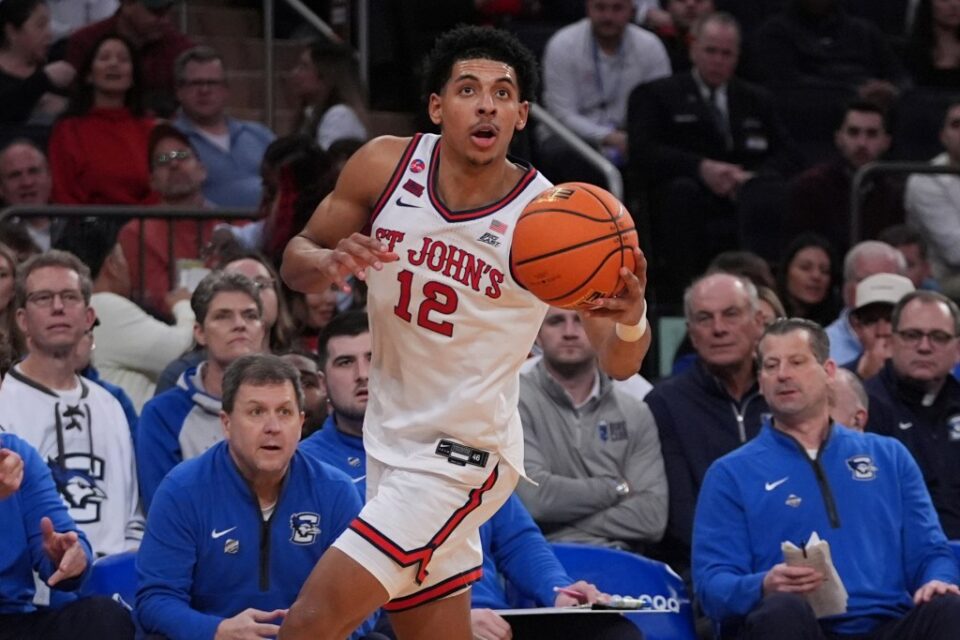
The ban impacts former St. John’s basketball star RJ Luis Jr., who committed to LSU in May.
Luis, now 23, declared for the 2025 NBA Draft but was not selected. He subsequently signed a two-way contract with the Utah Jazz. He was traded to the Boston Celtics in August 2025 and played in three preseason games with the team in October 2025 before being released in advance of the regular season.
Despite playing with the Celtics, albeit only in the preseason, and signing two professional contracts, on Monday, Ronald R. Johnson, a judge for the 19th Judicial District Court in East Baton Rouge Parish, Louisiana, granted Luis a temporary injunction to play for LSU with the college basketball season tipping off in the fall. More legal faceoffs between Luis and the NCAA are undoubtedly upcoming.
The NCAA at least can mildly celebrate the Tenth Circuit Court of Appeals reversing the decision in the Wisne v. NCAA case last Friday, granting them a stay and disallowing the class of 2022 a fifth year of eligibility. However, those athletes who have previously been awarded a fifth year through restraining orders in state courts still, for the moment, are retaining that fifth year.
All of the monotonous legal wrangling and debates in political chambers should have college sports fans rightly screaming: LET THE GAMES BEGIN!
The post As athletes leverage the system, major college sports are a cauldron of litigation appeared first on New York Amsterdam News.
